A 30-yard roll-off container provides 30 cubic yards of volume, which equals approximately 12 to 14 standard six-foot pickup truck beds of non-compacted material. In historic Charlotte neighborhoods like Dilworth,…
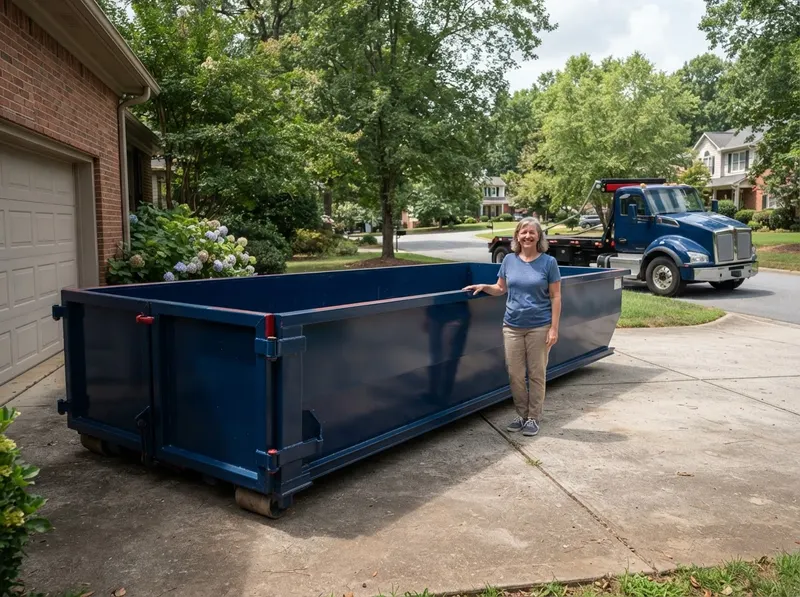
A 30-yard roll-off container provides 30 cubic yards of volume, which equals approximately 12 to 14 standard six-foot pickup truck beds of non-compacted material. In historic Charlotte neighborhoods like Dilworth, Plaza Midwood, and Myers Park, home additions and full-home flooring overhauls generate rapid piles of dense construction materials. This specific footprint fits inside a standard residential driveway without blocking public sidewalk easements or violating local rules overseen by the Charlotte Department of Transportation. Placement on sloped properties or tree-lined access streets requires ground boards to disperse wheel pressure, protecting concrete and pavers from surface marking during rollout.
Navigating project scope dictates container selection. A 20-yard roll-off serves modest kitchen updates, whereas a 30-yard model provides the extra wall height needed for bulky items such as whole-house multi-room carpet extractions, complete roof tear-offs up to 40 squares of architectural shingles, or commercial tenant build-outs near South End and NoDa. Federal work site regulations detailed by the Occupational Safety and Health Administration mandate clear perimeter zones around open containers, ensuring crews do not throw materials above container side walls. Projects involving whole-property interior demotions produce mixed waste streams that require careful sorting under the guidelines set by the US Environmental Protection Agency.
Disposal compliance remains subject to regional state environmental oversight. Construction materials hauled across Charlotte are managed pursuant to the North Carolina Department of Environmental Quality solid waste regulations, which prohibit the co-mingling of liquid paints, automotive fluids, refrigerants, and commercial chemicals. Residential projects in suburban districts such as Ballantyne and Cotswold frequently encounter homeowner association aesthetics policies. CityLoad Container Services avoids municipal street encroachment by spotting the container entirely on private driveway surfaces, using roll-off trucks equipped with cable and hook lifts. Non-hazardous materials are routed to authorized regional sorting stations and recyclers following recovery standards from the Institute of Scrap Recycling Industries.
Demolition debris requiring recycling processing, such as structural timber and unpainted concrete, is tracked in coordination with the Construction and Demolition Recycling Association parameters to divert reusable mass from regional landfills. When clearing estate items, salvageable dry goods are handled in line with resource recovery methodologies from Earth911. Container drop-off does not require the customer to stay on-site if delivery instructions, overhead wire clearances, and ground pad positions are verified in advance with dispatch. To coordinate container positioning, call (980) 294-7236 or send a text photo of the staging area to confirm physical access along neighborhood corridors before dispatch.
Every job gets a firm, written price after a free on-site visit.
For standards, safe disposal, and service guidance on DUMPSTER in Charlotte, NC, useful references include U.S. EPA, EPA, EPA, OSHA, Earth911, and Google Maps. General consumer and small-business resources are available from USA.gov, Better Business Bureau, FTC Consumer Advice, U.S. Small Business Administration, and Ready.gov.
Tell us about your 30-yard dumpster rental job in Charlotte and we'll send a clear, written quote, usually the same day.
 CityLoad Container Services